Hot takes on the events of October 16, 17, and 18 in Italy.
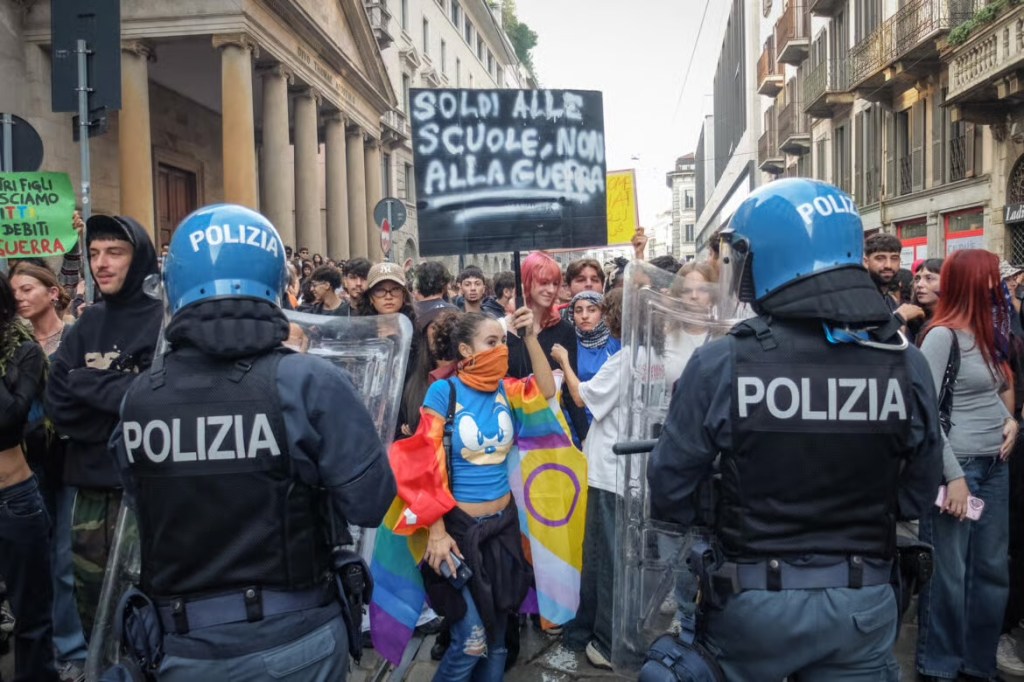
Venerdì 16, sabato 17 e domenica 18 ottobre decine di migliaia di giovani sono scesi in piazza nelle principali città italiane ed in particolare a Milano, in forme e con modalità inedite, almeno per la realtà italiana. Inedite perché erano decenni che non si vedeva una mobilitazione giovanile così determinata e inedite per le forme che questa rabbia ha assunto, totalmente fuori da tutte le logiche di organizzazione, di sindacato, di struttura e di movimento che hanno caratterizzato le manifestazioni nel nostro Paese almeno dagli anni ‘80.
Si tratta dell’insorgere di un fenomeno nuovo, di nuove forme della lotta di classe che da qui ai prossimi anni incendierà le piazze e le città o si tratta di un fuoco di paglia destinato a spegnersi in fretta? Si tratta di forme di conflittualità che riusciranno a trovare e a darsi una connotazione, un organizzazione e una visione di alternativa tali da arrivare un domani a mettere in discussione un sistema piegato da una crisi gravissima o si tratta solamente di una violenza nichilista di chi non vedendo alcun futuro possibile oltre al miserabile presente sfoga la sua rabbia attraverso la distruzione di una città che non sente sue e da cui si sente emarginato? Naturalmente non è dato oggi saperlo, tutto può essere e, in fin dei conti, sono domande che hanno poco valore. Possiamo essere sicuri però che qualsiasi sia lo sbocco di questa protesta, il governo si prepara ad inasprire ancora di più la tendenza autoritaria, tecnocratica e dispotica nella sua marcia verso la guerra e la barbarie. Molto più interessante allora è cercare di capire cosa le proteste concrete di questi giorni sta dicendo achi ha una visione di classe e iniziare ad abbozzare una riflessione, da sviluppare nel prossimo futuro, per cercare di interpretare e dare significato a tali segni.
Storia recente e contagi d’oltralpe
Guardando alla storia delle rivolte popolari e proletarie dettate dalle crisi di questo inizio di secolo possiamo partire da una prima fase caratterizzata dalla Seconda Intifada in Palestina (2000) e dalla violenta esplosione sociale dell’Argentina nel dicembre 2001 con i piqueteros che bloccavano le strade e le città al grido di «Que se vayan todos», travolgendo il governo colpito dal crac del debito sovrano; fino alla rivolta delle banlieue francesi del 2005, alle quali abbiamo dedicato una lunga intervista.
Con lo scoppio della crisi finanziaria del 2008 la situazione si inasprì, il primo paese ad essere colpito e ad insorgere fu la Grecia, nel suo piccolo in Italia, ci fu “L’onda” studentesca contro la riforma Gelmini culminata con la guerriglia del 14 dicembre 2009 a Roma. Seguirono nel 2011 le Primavere Arabe (Tunisia, Egitto, Libia, Yemen, Bahrein, Siria, Marocco). Nello stesso periodo la rabbia contro le politiche di austerità in occidente prese la forma degli Indignados in Spagna e del movimento Occupy Wall Street negli Stati Uniti, per poi estendersi alle proteste di Piazza Taksim in Turchia mentre anche in Italia si sviluppava un movimento culminava nella pesante repressione della manifestazione del 15 ottobre 2011.
Dopo alcuni anni di reazione e riflusso un nuovo movimento riprese a partire dal 2018 con una nuova e ancor più imponente sollevazione planetaria: dal movimento dei Gilet Jaunes in Francia alla rivolta in Sudan che ha travolto la dittatura, dalla sollevazione cilena esplosa contro il carovita e l’eredità liberista ai moti di massa in Libano, Iraq e Algeria. A questi si sono aggiunti altri significativi moti di protesta in asia e sud america fino alla rivolta antirazzista e antistatale che attraversò gli Stati Uniti nel 2020 a seguito dell’uccisione di George Floyd.
Il COVID si posò come una pesante coltre su questi movimenti, soffocandoli, almeno in occidente e per almeno un quinquennio.
Dopo la crisi pandemica la fase viene segnata dall’inflazione globale e dall’accelerazione della guerra e dell’economia di guerra. Si apre una fase dove le lotte e le rivolte si diffondono sopratutto nella periferia del capitale. Nel 2022 in Kazakistan per il caro energia (che assunse tratti insurrezionali e venne repressa nel sangue dai reparti militari russi), nel collasso dello Sri Lanka con la presa del palazzo presidenziale, in Iran dopo l’uccisione di Mahsa Amini dando seguito alle sommosse del 2017, 2019, 2021. Poi riprendono in Kenya, Bangladesh, Indonesia nel 2024, in Nepal, Marocco, Madagascar, Filippine, Ecuador, Perù e ancora Iran nel 2025-2026.
Finalmente, nel settembre 2026, la rivolta ritorna in occidente, nel cuore della metropoli capitalista, con le mobilitazioni giovanili contro il carovita e la guerra e per l’istruzione pubblica e la casa in Francia, Spagna, Germania, Albania, in quest’ultimo paese le mobilitazioni sono iniziate per la difesa dei territori e dell’ambiente dalla speculazione, per poi fondersi in una lotta unita, a forte partecipazione giovanile, contro il governo, la corruzione e il carovita.
In Italia ad inizio ottobre ci sono state una serie di occupazioni di scuole, che hanno subito importanti livelli di repressione poliziesca. Il 16 ottobre si sono svolti i cortei studenteschi del NO MELONI DAY, che hanno mobilitato decine di migliaia di studenti. Il 17 e 18 ottobre, con una serie di mobilitazioni dai caratteri originali e trasversali, come dicevamo, inizia finalmente (e auspicabilmente) a essere finalmente messa in discussione la pace sociale anche nel Bel Paese.
Che aria tira in Italia?
Nelle ultime settimane il clima ha iniziato a scaldarsi:
- il senso di disagio generato dal caro benzina, dall’economia di guerra, dal problema abitativo e dal deprecabile stato in cui versano i servizi, la sanità, l’istruzione e le stesse città si sta generalizzando;
- nel sud Italia gli autotrasportatori e gli agricoltori esasperati stanno operando in questi giorni i blocchi stradali in Sicilia, Calabria, Puglia e Basilicata;
- la CGIL, evidentemente preoccupata dalla situazione, e questa volta determinata a non farsi scavalcare, ha convocato sabato 17 ottobre una imponente manifestazione a Roma con tanto di tende simboliche degli studenti e parole infuocate dal palco, con decine di migliaia di partecipanti e la proclamazione dello sciopero generale per il 20 novembre.
- venerdì 16 decine di migliaia di studenti medi sono scesi in piazza nelle principali città italiane, con momenti di tensione a Torino e Roma. Queste manifestazioni studentesche hanno condensato e si sono caricate sulle spalle il vero avvio della protesta rispetto alla crisi e alle politiche borghesi.
Quello che abbiamo colto dei Riot del 17 e 18
Abbiamo seguito le mobilitazioni studentesche di venerdì 16 e siamo stati incollati alla radio e ai media per cercare di capire cosa stava succedendo nel nord Italia il 17 e il 18. Queste sono le riflessioni a caldo che ne abbiamo tratto e quello che abbiamo capito (ma siamo lieti di essere smentiti se qualcuno vuole aiutarci ad approfondire la riflessione).
Dopo la giornata del 16, nei cortei del 17, in particolare, le due anime giovanili degli studenti e dei giovani della periferia si sono toccate, confuse, ma sono rimaste anche distinte seppur unite dal NO ad una condizione sempre peggiore. Ciò che le ha unite è stata tanto la reazione alla medesima condizione di crisi, e le sue ricadute sulla popolazione, quanto la risposta repressiva: facce diverse della stessa medaglia. Il 17 emerge la condizione sociale di estrema precarietà e marginalità a cui questi spezzoni di proletariato giovanile sono ascritti, fra sfruttamento estremo ed extralegalità, o spesso tutte e due assieme.
La manifestazione di sabato 17 ha avuto caratteristiche nuove, differenti dalle classiche manifestazioni a cui siamo stati abituati nei decenni. Innanzitutto i promotori, “Italia in piazza”, si presentano come un movimento spontaneo di protesta giovanile e studentesca, nato principalmente tramite i social network, che si autodefinisce apartitico e indipendente dalle tradizionali organizzazioni sindacali.
Il movimento ha promosso e coordinato la mobilitazione nazionale contro il carovita, l’inflazione, le politiche economiche e sociali del governo, le spese militari, riuscendo a organizzare piazze in diverse città italiane tra cui Milano, Brescia, Bologna e Torino, con migliaia di manifestanti ognuna.
I cortei presentavano una connotazione originale: alle tradizionali bandiere della Palestina e delle forze antagoniste e agli striscioni si affiancavano, per la prima volta, molte bandiere Italiane. Cosa strana per la tradizione dei cortei nel nostro paese che hanno sempre identificato il tricolore come “fascista”. L’ingresso della bandiera nazionale nei cortei e la sua accettazione sono dovute probabilmente un po’ al “sentirsi popolo come i francesi” – che manifestano con la bandiera nazionale come sta avvenendo in tutti i recenti moti nella crisi che abbiamo elencato sopra –, un modo per dire “il popolo siamo noi” e un po’ per l’identificarsi come “italiani” da parte dei giovani di seconda e terza generazione, figli o nipoti di immigrati. Fatto sta che gli slogan contro il governo fascista Meloni e il ripetuto “Siamo tutti antifascisti” hanno caratterizzato tutta la prima parte delle manifestazioni, escludendo una lettura del tricolore in chiave di destra.
La polizia era massicciamente schierata e ha iniziato ad attaccare i cortei pacifici prima che questi terminassero, impedendogli di avanzare. Qui si apre la seconda parte delle manifestazioni, i riot di bande di ragazzini che, in particolare a Milano, ma anche in altre città, hanno dato vita a espropri e scontri con le forze dello Stato dispiegate in maniera molto massiccia.
I partecipanti alla fase dei riot sono stati migliaia di giovanissimi (l’80% degli oltre 300 fermati è minorenne) per lo più, italiani di seconda e terza generazione “vestiti da maranza”.
Questi giovani, marginalizzati dalla società del profitto e dello sfruttamento, hanno iniziato ad esprimere il loro disagio, rabbia e malcontento dando vita alla nuova forma dell’esproprio proletario: il saccheggio dei negozi dei grandi marchi come Footlocker, Decathlon, Under Armour, Carrefour, Nike, Rinascente… E lo hanno fatto nelle forme che conoscono: filmandosi e riprendendo contenuti da poter poi condividere su tik-tok e su telegram.
La cosa ha funzionato talmente bene che il giorno dopo, la domenica, in maniera totalmente spontanea, altre migliaia di giovani esaltati dai video che erano circolati tutta la notte, si sono dati appuntamento tramite social per ripetere l’esperienza, ne è seguito un’intero pomeriggio di scontri e saccheggi su larga scala, se possibile ancora più violenti. Una roba forse mai vista in Italia con tale spontaneità e su scala così ampia, un inedito assoluto, almeno nell’ultimo cinquantennio, ma che fa seguito a diversi furti di massa in vari supermercati del nord Italia che sono stati registrati negli ultimi mesi, sempre ad opera di giovanissimi.
La violenza poliziesca è stata enorme, con i caroselli in piazza Duomo, gli agenti che arrestavano e picchiavano ragazzi presi a caso, come le cariche a freddo del giorno prima, anche a Bologna e Torino.
Qualche riflessione finale
Stiamo vivendo le prime avvisaglie di nuove forme di lotta di classe rispetto alle quali dobbiamo imparare il più e prima possibile a relazionarci?
Il Governo ha già identificato da tempo nel proletariato giovanile il nemico: dal decreto Rave, al decreto Caivano, all’imputabilità dei genitori, all’abbassamento dell’età in cui i minori possono essere condotti a processo, ai decreti sicurezza. Il proletariato giovanile è un loro nemico dichiarato: va piegato e genuflesso alle condizioni del capitale.
Le forme estreme degli espropri e degli scontri erano tanto violente quanto spontanee e disorganizzate. Abbiamo visto decine e decine di ragazzi a volto scoperto che rischiano ora di essere identificati, non vi è organizzazione né riferimento politico alcuno, anche se di sicuro la connotazione di destra e razzista viene fermamente rifiutata.
Il riot ripropone le dinamiche a cui i giovani sono assuefatti nella società dello spettacolo, del consumo e della perpetua connettività globale: si vestono sfoggiando marchi ben determinati, si riprendono mentre fanno “le azioni”, postano immediatamente su tik-tok e su telegram, esprimono una rabbia spontanea e diretta, senza curarsi troppo delle conseguenze, come è tipico dell’adolescenza, si riconoscono come gruppo, branco, sottocultura in base alla musica che ascoltano, per lo più cantanti trap come Baby Gang, Simba La Rue etc.
Decenni di ristrutturazione delle metropoli, caro affitti, marginalizzazione, hanno prodotto una situazione di nuove marginalità all’interno delle quali sono maturati nuovi risentimenti e nuove sottoculture tra nichilismo e rivolta e che solo ora sta iniziando a mostrarsi, a esplodere, anche in Italia, cominciando timidamente a riprodurre le forme ben più avanzate che ha già assunto in Francia.
Non è un caso che Trump, parlando della Francia, dia la colpa agli immigrati: sono una parte importante del proletariato, spesso la più marginalizzata e, quindi, più disposta a rischiare nella lotta.
Toccherà poi vedere se a questa rabbia giovanile riuscirà a saldarsi la rabbia dei tanti lavoratori e lavoratrici che stanno vedendo rapidamente peggiorare le loro condizioni di vita e di lavoro, allora sì che il movimento potrebbe imboccare una fase veramente interessante.
Intanto il 30 ottobre ci sarà un importante sciopero del sindacalismo di base, il 20 novembre quello della CGIL, in mezzo varie settimane in cui potrebbero succedere cose interessanti.
La partita è tutta da giocare, noi rivoluzionari internazionalisti cercheremo di fare la nostra parte.
18 ottobre sera.
Hot takes on the events of October 16, 17, and 18 in Italy.
On Friday the 16th, Saturday the 17th, and Sunday the 18th of October, tens of thousands of young people took to the streets in major Italian cities—and particularly in Milan—in forms and with methods that were unprecedented, at least for the Italian reality. Unprecedented because it had been decades since such a determined youth mobilization had been seen, and unprecedented in the forms this anger assumed, completely outside all the organizational, trade union, structural, and movement logics that have characterized demonstrations in our country at least since the 1980s.
Is this the emergence of a new phenomenon, of new forms of class struggle that will set squares and cities ablaze over the coming years, or is it merely a flash in the pan destined to burn out quickly? Are these forms of conflictuality that will manage to find and give themselves a connotation, an organization, and an alternative vision capable one day of challenging a system crushed by a very severe crisis, or is it merely the nihilistic violence of those who, seeing no possible future beyond a miserable present, vent their anger through the destruction of a city they do not feel is theirs and from which they feel alienated? Naturally, it is impossible to know today; anything is possible, and ultimately, these are questions of little value. We can be sure, however, that whatever the outcome of this protest, the government is preparing to further intensify its authoritarian, technocratic, and despotic tendency in its march toward war and barbarism. Much more interesting, then, is trying to understand what the concrete protests of these days are telling those who possess a class vision, and beginning to sketch out a reflection—to be developed in the near future—to try to interpret and give meaning to these signs.
Recent history and contagion from across the Alps
Looking at the history of popular and proletarian revolts driven by the crises of this early century, we can start from a first phase characterized by the Second Intifada in Palestine (2000) and the violent social explosion in Argentina in December 2001, with the piqueteros blocking roads and cities to the cry of «Que se vayan todos», overwhelming the government struck by the sovereign debt crash; right up to the French banlieues revolt of 2005, to which we dedicated a long interview.
With the outbreak of the financial crisis in 2008, the situation worsened; the first country to be hit and to rise up was Greece. On a smaller scale in Italy, there was the student “Wave” (Londa) against the Gelmini reform, culminating in the guerrilla warfare of December 14, 2009, in Rome. This was followed in 2011 by the Arab Spring (Tunisia, Egypt, Libya, Yemen, Bahrain, Syria, Morocco). During the same period, anger against austerity policies in the West took the form of the Indignados in Spain and the Occupy Wall Street movement in the United States, before extending to the protests in Gezi Park / Taksim Square in Turkey, while in Italy a movement also developed that culminated in the heavy repression of the October 15, 2011 demonstration.
After a few years of reaction and ebb, a new movement resumed starting in 2018 with a new and even more imposing planetary uprising: from the Gilet Jaunes movement in France to the revolt in Sudan that overthrew the dictatorship, from the Chilean uprising exploded against the cost of living and the neoliberal legacy, to the mass unrest in Lebanon, Iraq, and Algeria. To these were added other significant protest movements in Asia and South America, right up to the anti-racist and anti-state revolt that swept through the United States in 2020 following the killing of George Floyd.
COVID settled like a heavy blanket over these movements, suffocating them, at least in the West and for at least a quinquennium.
Following the pandemic crisis, the phase is marked by global inflation and the acceleration of war and the war economy. A phase opens where struggles and revolts spread primarily on the periphery of capital. In 2022 in Kazakhstan over fuel prices (which assumed insurrectional traits and was suppressed in blood by Russian military units), in the collapse of Sri Lanka with the seizure of the presidential palace, in Iran following the killing of Mahsa Amini, following up on the unrest of 2017, 2019, and 2021. Then they resume in Kenya, Bangladesh, Indonesia in 2024, in Nepal, Morocco, Madagascar, the Philippines, Ecuador, Peru, and again Iran in 2025–2026.
Finally, in September 2026, the revolt returns to the West, to the heart of the capitalist metropolis, with youth mobilizations against the cost of living and war, and for public education and housing in France, Spain, Germany, and Albania—in this latter country, mobilizations began for the defense of territories and the environment from speculation, before merging into a united struggle, with strong youth participation, against the government, corruption, and the cost of living.
In Italy, at the beginning of October, there was a series of school occupations that suffered significant levels of police repression. On October 16, the NO MELONI DAY student marches took place, mobilizing tens of thousands of students. On October 17 and 18, with a series of mobilizations featuring original and cross-cutting traits, as we were saying, social peace is finally (and hopefully) beginning to be called into question even in the Bel Paese.
What is the mood in Italy?
In recent weeks, the climate has begun to heat up:
- the sense of unease generated by high gas prices, the war economy, the housing problem, and the deplorable state of public services, healthcare, education, and the cities themselves is becoming generalized;
- in southern Italy, exasperated truckers and farmers are currently carrying out roadblocks in Sicily, Calabria, Puglia, and Basilicata;
- the CGIL, evidently worried by the situation and this time determined not to be bypassed, called an imposing demonstration in Rome on Saturday, October 17, complete with symbolic student tents and fiery speeches from the stage, with tens of thousands of participants and the proclamation of a general strike for November 20;
- on Friday the 16th, tens of thousands of high school students took to the streets in major Italian cities, with moments of tension in Turin and Rome. These student demonstrations condensed and bore the brunt of the true onset of protest against the crisis and bourgeois policies.
What we grasped from the riots of the 17th and 18th
We followed the student mobilizations of Friday the 16th and were glued to the radio and media trying to understand what was happening in northern Italy on the 17th and 18th. These are the hot takes we drew from it and what we understood (though we are happy to be proven wrong if anyone wants to help us deepen the reflection).
After the day of the 16th, in the marches of the 17th in particular, the two youth souls—students and youth from the suburbs—touched and mingled, yet also remained distinct though united by the NO to an increasingly worsening condition. What united them was both the reaction to the identical condition of crisis and its repercussions on the population, and the repressive response: different sides of the same coin. On the 17th, the social condition of extreme precarity and marginality to which these segments of the youth proletariat are assigned emerges, caught between extreme exploitation and extralegality, or often both together.
The demonstration of Saturday the 17th had novel characteristics, different from the classic demonstrations we have been accustomed to over the decades. First of all, the promoters, “Italia in piazza” (Italy in the Square), present themselves as a spontaneous movement of youth and student protest, born primarily via social networks, which defines itself as non-partisan and independent of traditional trade union organizations.
The movement promoted and coordinated the national mobilization against the cost of living, inflation, the government’s economic and social policies, and military spending, managing to organize squares in various Italian cities including Milan, Brescia, Bologna, and Turin, with thousands of demonstrators each.
The marches displayed an original connotation: alongside traditional Palestinian flags, banners, and forces of the antagonism, there appeared for the first time many Italian flags. A strange thing for the tradition of marches in our country, which have always identified the tricolor as “fascist.” The entry of the national flag into the marches and its acceptance are probably due partly to “feeling like a people like the French”—who demonstrate with the national flag as is happening in all the recent uprisings amid the crisis we listed above—a way of saying “we are the people,” and partly to identifying as “italians” by second- and third-generation youth, children or grandchildren of immigrants. Be that as it may, slogans against the fascist Meloni government and the repeated “We are all antifascists” characterized the entire first part of the demonstrations, ruling out a right-wing reading of the tricolor.
The police were massively deployed and began attacking peaceful marches before they ended, preventing them from advancing. Here opens the second part of the demonstrations: the riots by gangs of kids who, particularly in Milan but also in other cities, gave rise to expropriations and clashes with state forces deployed in a very massive manner.
The participants in the riot phase were thousands of very young people (80% of the over 300 detained are minors), mostly second- and third-generation Italians “dressed as maranza.”
These youths, marginalized by the society of profit and exploitation, began to express their distress, anger, and discontent by giving birth to a new form of proletarian expropriation: the looting of stores of major brands like Foot Locker, Decathlon, Under Armour, Carrefour, Nike, Rinascente… And they did so in the forms they know: filming themselves and recording content to then share on TikTok and Telegram.
The thing worked so well that the following day, Sunday, entirely spontaneously, thousands of other youths hyped up by the videos that had circulated all night agreed via social media to repeat the experience. An entire afternoon of large-scale clashes and looting followed, if possible even more violent. Something perhaps never seen in Italy with such spontaneity and on such a wide scale—an absolute unprecedented event, at least in the last half-century—yet following several mass thefts in various supermarkets in northern Italy recorded in recent months, also perpetrated by very young people.
Police violence was enormous, with police carousels in Piazza Duomo, officers arresting and beating youths picked at random, just like the unprovoked charges of the previous day, also in Bologna and Turin.
Some final reflections
Are we experiencing the first harbingers of new forms of class struggle with which we must learn to relate as much and as soon as possible?
The Government has long identified the youth proletariat as the enemy: from the Rave Decree, the Caivano Decree, parental liability, lowering the age at which minors can be put on trial, to the security decrees. The youth proletariat is their declared enemy: it must be bent and genuflected to the conditions of capital.
The extreme forms of expropriations and clashes were as violent as they were spontaneous and disorganized. We saw dozens and dozens of bare-faced kids who now risk being identified; there is no organization nor any political reference whatsoever, even though the right-wing and racist connotation is firmly rejected.
The riot re-proposes the dynamics to which youth are habituated in the society of the spectacle, consumption, and perpetual global connectivity: they dress displaying very specific brands, they record themselves while doing “actions,” they post immediately on TikTok and Telegram, they express a spontaneous and direct anger without caring too much about the consequences, as is typical of adolescence; they recognize each other as a group, pack, or subculture based on the music they listen to, mostly trap artists like Baby Gang, Simba La Rue, etc.
Decades of metropolitan restructuring, expensive rents, and marginalization have produced a situation of new marginalities within which new resentments and new subcultures between nihilism and revolt have matured, which is only now beginning to show itself, to explode, even in Italy, timidly beginning to reproduce the much more advanced forms it has already assumed in France.
It is no coincidence that Trump, speaking of France, blames immigrants: they are an important part of the proletariat, often the most marginalized and, therefore, most willing to take risks in the struggle.
It remains to be seen whether the anger of the many workers—men and women—whose living and working conditions are rapidly deteriorating will manage to link up with this youth anger; if so, the movement could enter a truly interesting phase.
Meanwhile, on October 30 there will be an important strike by grassroots trade unionism, on November 20 one by the CGIL, with various intervening weeks in which interesting things could happen.
The game is wide open; we internationalist revolutionaries will try to do our part.
Evening of October 18.

