France and Spain: And Yet It Moves
Le contraddizioni prima o poi scoppiano, ed è quello che sta accadendo in Francia e in Spagna, con echi in altri paesi d’Europa, movimenti differenti eppure figli della stessa crisi.
Francia
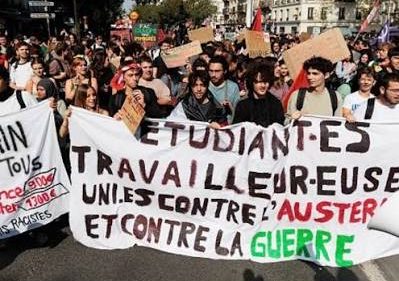
In Francia sono scesi in piazza gli studenti, in massa, determinati a non arretrare nonostante la brutale repressione alla quale sono sottoposti. Le loro rivendicazioni sono semplici: scuole che non cadano a pezzi, professori invece di buchi orari e supplenti a singhiozzo, un accesso veramente egualitario al sapere. Dietro la loro rabbia cova però un malcontento di classe: a mobilitarsi sono soprattutto gli studenti delle periferie e delle banlieue, la generazione di quelli che stanno iniziando a prendere consapevolezza che il capitalismo ha ben poco da offrirgli, figli della classe operaia precarizzata, immigrati di seconda e terza generazione spinti sempre più ai margini del sistema. Giovani utili ormai solo come braccia da spremere a basso costo per la valorizzazione del capitale o, in alternativa, come carne da cannone sui fronti delle guerre presenti e future. Da qui la coscienza – seppur espressa in forma istintiva – di essere una generazione che non ha niente da perdere e che non intende andare a morire per la guerra. Spontaneamente legano la loro condizione materiale all’avanzare dell’economia di guerra e alla preparazione alla stessa, che ogni Stato sta promuovendo. Anche in Germania gli studenti sono scesi in piazza per protestare contro la leva obbligatoria, dietro lo slogan: “Non parteciperemo alle vostre guerre”. È intorno a questi problemi che il movimento degli studenti sta catalizzando altri settori sociali e lavorativi, colpiti dalle stesse tensioni e dallo stesso sistema.
Repressione
Un sistema che non è in grado, né vuole, tollerare chi alza la testa. Così con migliaia di arresti, cariche brutali, ferimenti gravi come amputazioni, traumi cranici e perdita della vista, dovuti ad uno uso indiscriminato e criminale di granate assordanti, lacrimogeni e proiettili di gomma, lo Stato ha dato vita a una repressione che, secondo alcune fonti, non si vedeva così massiccia dai tempi dell’Algeria (anni ‘60). Questa violenta azione repressiva assolve a una duplice funzione: da una parte la necessità di tacitare qualsiasi dissenso, in un momento storico in cui non c’è spazio per nessun tipo di critica al sistema, specialmente se si mettono in discussione le conseguenze sociali della corsa agli armamenti; dall’altra un monito verso quanti pensano che protestare sia “un diritto civile” senza conseguenze. L’uso del terrore sui vari piani (poliziesco, legislativo, mediatico, militare) è una tendenza che va consolidandosi, permeando ogni aspetto della nostra vita.
Spagna
Dall’altro lato dei Pirenei c’è la Spagna nella quale è esploso un altro bubbone endemico dell’economia capitalista: la penuria nell’abbondanza. Perché il problema non è tanto la carenza di case, quanto il rapporto di produzione capitalistico, nel quale sempre meno persone possono permettersele. Nel Paese iberico non mancano le abitazioni ma, come ormai d’uso da tempo anche in Italia, gli immobili sono oggetto di speculazione da parte dei grandi fondi immobiliari che preferiscono lasciarli sfitti, affittarli a breve tempo ai turisti, operare la speculazione che fa lievitare i prezzi e al contempo spinge i proletari sempre più ai margini delle città (vetrina). I proletari vengono sistematicamente espulsi dal centro verso la periferia, quando non ai margini dell’esistenza stessa quando la casa smettono di averla e finiscono in mezzo alla strada.
I dati sul problema abitativo spagnolo sono statisticamente molto simili a quelli italiani, ma qui da noi la mobilitazione è lungi da venire. L’unico accenno, al quale abbiamo partecipato, è stata la manifestazione per Spin Time dove qualche migliaio di persone si è accodata dietro la supplica alle istituzioni affinché risolvessero loro il problema.
I movimenti e i loro nemici
Sappiamo che i movimenti di lotta vanno e vengono, si radicalizzano e poi passano, accerchiati come sono da due nemici storici: da un lato la sinistra para/filo istituzionale che li irretisce, li conquista, li dirige, li porta sui binari della concertazione istituzionale e lì li lascia a morire. Dall’altro la destra nazionalista e reazionaria che soffia sugli istinti più brutali e razzisti della popolazione per portare avanti progetti autoritari. Insomma, la sinistra cerca di legare mani e piedi al proletariato mentre la destra lo prende a bastonate, frantumando e dividendo i proletari in razze e nazioni, fomentando la guerra tra gli ultimi: uno schema tanto vecchio quanto sempre valido, ma dietro cui si cela una borghesia sempre pronta a ricompattarsi lì dove la pace sociale è messa in discussione e trova ostacoli all’affermarsi dei propri interessi generali.
Intervenire come internazionalisti
In tutto questo il ruolo delle avanguardie rimane quello di intessere relazioni e far avanzare, anche all’interno dei movimenti, quelle parole d’ordine capaci di riportare i problemi alla loro reale essenza:
- la ristrutturazione capitalista con le sue ricadute sulla classe proletaria e sulla sua continua ridefinizione;
- la centralità del proletariato come soggetto che unico può mettere in discussione il sistema capitalista nel suo complesso;
- il rifiuto delle prospettive della destra e della sinistra filo-sistema che sono complementari nel depotenziare le lotte, dividere il proletariato e condurlo sui binari morti dei conflitti intestini e della fiducia nelle istituzioni. Da questo punto di vista anche il sindacalismo di base e le strutture politiche della sinistra radical-riformista hanno una responsabilità immensa, contribuendo a dividere e frammentare la classe in decine di micro scioperi e vertenze costantemente scollegate tra loro.
- la denuncia dei sacrifici in nome dell’economia di guerra e della corsa al riarmo, il rifiuto dello schieramento sulle linee dei fronti nazionali in luogo della lotta sul fronte di classe.
Far ruotare il ragionamento politico attorno a questi princìpi è la premessa imprescindibile per porre al centro del discorso l’anticapitalismo, la prospettiva rivoluzionaria. Perché pane e pace per tutto il proletariato possono essere garantiti solamente attraverso la conquista rivoluzionaria del potere politico da parte del proletariato stesso.
Per questo è importante che, sulla base di questi punti di base, il confronto e l’intervento delle avanguardie di classe internazionaliste prosegua e si consolidi. Affinché ogni genuino moto di protesta possa divenire un moto di classe, costruendo al suo interno un punto di riferimento internazionalista che, domani, possa imprimere una direzione politica chiara, senza la quale la lotta di classe si subordina o alla difesa della democrazia o della Patria, entrambe sempre e solo borghesi.
France and Spain: And Yet It Moves
Contradictions sooner or later explode, and that is precisely what is happening in France and Spain, with echoes in other European countries—different movements, yet all children of the same crisis.
France
In France, students have taken to the streets en masse, determined not to back down despite the brutal repression to which they are subjected. Their demands are simple: schools that are not falling apart, teachers instead of schedule gaps and erratic supply teaching, genuinely equal access to knowledge. Behind their anger, however, lies a class discontent: those mobilizing are above all the students from the suburbs and the banlieues, the generation of those who are beginning to realize that capitalism has very little to offer them, children of the precarious working class, second- and third-generation immigrants pushed increasingly to the margins of the system. Young people who are now useful only as cheap labor to be squeezed for the valorization of capital or, alternatively, as cannon fodder on the fronts of present and future wars. From this stems the awareness—however instinctively expressed—of being a generation that has nothing to lose and that does not intend to go and die for war. Spontaneously, they link their material condition to the advance of the war economy and the active preparation for it that every state is promoting. In Germany too, students have taken to the streets to protest against mandatory conscription, behind the slogan: “We will not participate in your wars.” It is around these problems that the student movement is catalyzing other social and labor sectors, affected by the same tensions and the same system.
Repression
A system that is neither able nor willing to tolerate anyone who raises their head. Thus, with thousands of arrests, brutal charges, and severe injuries such as amputations, head trauma, and loss of sight—due to the indiscriminate and criminal use of stun grenades, tear gas, and rubber bullets—the state has given rise to a level of repression that, according to some sources, has not been seen on such a massive scale since the time of Algeria (1960s). This violent repressive action serves a dual function: on the one hand, the need to silence any dissent at a historical moment when there is no room for any type of critique of the system, especially when questioning the social consequences of the arms race; on the other hand, a warning to those who think that protesting is a “civil right” without consequences. The use of terror across various levels (policing, legislative, media, military) is a trend that is consolidating, permeating every aspect of our lives.
Spain
On the other side of the Pyrenees lies Spain, where another endemic sore of the capitalist economy has exploded: scarcity within abundance. Because the problem is not so much a shortage of housing as the capitalist relation of production, in which fewer and fewer people can afford it. In the Iberian country there is no lack of homes, but, as has long been common practice in Italy as well, real estate is subject to speculation by major investment funds that prefer to leave properties vacant, rent them short-term to tourists, and carry out the speculation that drives prices up while pushing proletarians increasingly to the margins of showcase cities. Proletarians are systematically expelled from the center toward the periphery, if not to the margins of existence itself when they cease to have a home and end up in the street.
The data on the Spanish housing problem are statistically very similar to those in Italy, but here among us mobilization is far from happening. The only hint, in which we took part, was the demonstration for Spin Time, where a few thousand people joined behind a plea to the institutions to solve their problem.
Movements and Their Enemies
We know that movements of struggle come and go, radicalize and then pass, surrounded as they are by two historical enemies: on the one hand, the quasi/pro-institutional left that entangles them, wins them over, directs them, leads them onto the tracks of institutional negotiation, and leaves them there to die. On the other hand, the nationalist and reactionary right that blows on the most brutal and racist instincts of the population to advance authoritarian projects. In short, the left tries to tie the proletariat hand and foot, while the right beats it with sticks, fragmenting and dividing proletarians into races and nations, fueling war among the last: a scheme as old as it is always valid, but behind which hides a bourgeoisie always ready to reunite whenever social peace is called into question and encounters obstacles to the assertion of its general interests.
Intervening as Internationalists
In all of this, the role of the vanguards remains that of weaving relationships and advancing, even within the movements, those slogans capable of bringing problems back to their real essence:
- the capitalist restructuring with its repercussions on the proletarian class and its continuous redefinition;
- the centrality of the proletariat as the sole subject that can call into question the capitalist system as a whole;
- the rejection of the perspectives of the pro-system right and left, which are complementary in defusing struggles, dividing the proletariat, and leading it onto the dead-end tracks of internal conflicts and trust in institutions. From this point of view, grassroots trade unionism and the political structures of the radical-reformist left bear an immense responsibility, contributing to dividing and fragmenting the class into dozens of micro-strikes and disputes that are constantly disconnected from one another;
- the denunciation of sacrifices in the name of the war economy and the rearmament race, the refusal to take sides along national frontlines in place of struggle on the class front.
Making political reasoning revolve around these principles is the indispensable premise for placing anti-capitalism and the revolutionary perspective at the center of the discourse. Because bread and peace for the entire proletariat can be guaranteed solely through the revolutionary conquest of political power by the proletariat itself.
For this reason, it is important that, on the basis of these foundational points, the debate and intervention of internationalist class vanguards continue and consolidate. So that every genuine wave of protest can become a class movement, building within itself an internationalist point of reference that, tomorrow, can impart a clear political direction, without which the class struggle remains subordinated either to the defense of democracy or to the defense of the Fatherland, both always and exclusively bourgeois.

