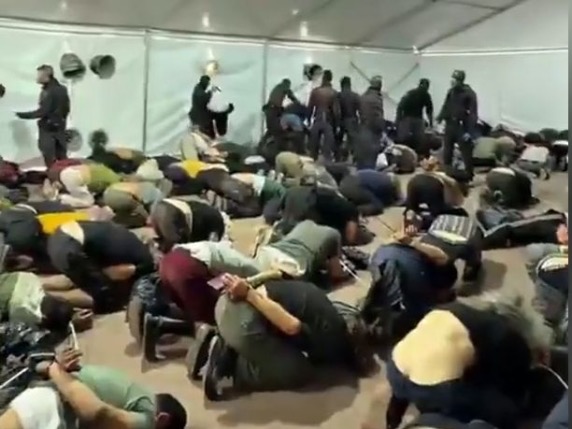
Le vicende ultime della Freedom Flotilla, ossia il brutale trattamento riservato agli attivisti catturati dall’IDF al quale si è sommata l’umiliazione da parte del ministro Ben Gvir, trasmesse sui media internazionali, hanno sollevato un’ondata di proteste più o meno formali da parte di numerosi paesi, soprattutto occidentali. Tutti stati che però in questi anni hanno in modo palese o tacito appoggiato l’iniziativa di guerra israeliana e americana in medio-oriente per i propri interessi economici e politico-strategici. Gli scenari di guerra imperialista sono tutt’ora in corso e al momento hanno il loro punto focale nella guerra con l’Iran.
Non ci soffermiamo tanto sul richiamo ai “diritti umani” violati degli attivisti della Freedom Flotilla prigionieri dell’IDF (e poi bastonati anche dalla polizia basca). Basta poco per capire come l’umanitarismo funga da comodo rifugio per esaltare valori che, nella pratica, vengono costantemente disconosciuti nel supporto sostanziale ai crimini imperialistici fuori casa e dentro le mura del proprio orticello statuale. Il proletariato e i lavoratori di tutto il mondo conoscono bene cosa voglia dire il confronto con la classe dominante: sia quando opera direttamente nello sfruttamento intensivo, sia quando attua la repressione e fa scorrere il sangue proletario, sia nel prodotto diretto delle immani carneficine che producono le guerre imperialiste.
Oggi Ben Gvir, se vogliamo soggettivizzare la questione, ci rammenta che cosa significa essere in guerra, uno “stato di guerra” verso nemici interni ed esterni, strappando apposta o suo malgrado il velo d’ipocrisia che avvolge quello che si sta realmente svolgendo in medio oriente sulla pelle di milioni di proletari e masse diseredate, ostaggi delle mire dell’una o dell’altra fazione borghese in lotta.
Le cancellerie e i governi dei vari paesi sanno bene quanto in realtà questo piccolo evento sia solo lo specchio di qualcosa di molto più grande ed atroce, che tocca il futuro dei propri “concittadini”, arruolati domani come “carne da cannone”, o finiti come rifiuti nei campi di prigionia.
Oggi la “questione palestinese”, il genocidio in atto, le guerre medio orientali, da noi hanno solo mostrato da lontano cosa significhi la guerra. Hanno catalizzato “l’opposizione” ai propri governi, spesso in maniera pre-politica o attraverso espressioni diverse e spesso finalità diverse, da quelle radicali a quelle democratico-borghesi. Si sono dati anche i primi tentativi nella pratica di costruzione di momenti di lotta contro la guerra e l’opposizione alle politiche di riarmo e di complicità con la stessa. In questo contesto l’azione delle varie Freedom Flotilla è servita a mantenere aperto il problema e alta l’attenzione, oltre ad essere un punto di riferimento per questo variegato movimento
Se allora la guerra entra nel salotto comodo di noi cittadini occidentali, bisogna giocoforza mistificarne il contenuto, ridurlo a fatto inoffensivo, a problema personale di tizio o di caio dentro un sistema complessivamente sano. Come se la guerra, qualsiasi guerra borghese, producesse invece Santi ed Eroi. E non porcherie continue, di ogni risma. Le nostre cancellerie forse non sanno questo? Quale differenza c’è fra i metodi di “accoglienza e permanenza” degli attivisti della Flotilla, e la realtà passata e presente dei carceri speciali in Italia, o il benvenuto fatto a Bolzaneto ai manifestanti arrestati durante il G8 del 2001, ma anche dei “centri di accoglienza” per immigrati? Solo per fare qualche esempio. E dall’altra parte “ridurlo” a problema degli attivisti della Flotilla stessa significa mettere sotto il tappeto quello che riguarda le migliaia di prigionieri di guerra e della guerra e le condizioni effettive che patiscono. Perché appunto siamo in presenza di “eccessi” in un sistema sostanzialmente sano. Ciò allora, dal nostro punto di vista. vuol dire che il problema è quello che si auto definisce “sistema sostanzialmente sano”.
Ma la “pace sociale” è sacra, il momento è delicato. Ed ecco quindi entrare in campo, in maniera complementare alla più sostanziale posa autoritaria degli Stati, la faccia “buona” della borghesia che si fa avanti ad “alzare i toni”, ma stando ben attenta a delimitare il campo e a riportare il tutto sotto l’egida degli “eccessi”: perché così sempre vengono nominate le porcherie della borghesia, prodotto di questa o quest’altra “mela marcia”, sia un semplice funzionario di Pubblica Sicurezza, sia un ministro di una potenza alleata. Approccio ben misero ma funzionale alla riaffermazione degli eterni valori democratico-borghesi, per tentare di gestire le sfasature fra il piano sostanziale su cui si muovono le politiche degli stati borghesi, che se ne strafottono dei “diritti umani”, e il piano formale, perché non sia messa in discussione la legittimità di fondo di questo sistema e siano inglobate e recuperate alla “dialettica democratica” le spinte critiche gestibili , al fine della stessa stabilità complessiva dello stesso.
Su un altro piano poi emergono tutti i nodi contraddittori che la stagione di “guerra permanente “ ha aperto nel Medio Oriente e soprattutto nel passaggio odierno della guerra verso l’Iran. Nodi che attengono al quadro di crisi economica profonda che attanaglia tutti i paesi capitalistici, e che le ricadute sull’interruzione dei flussi energetici, commerciali in snodi strategici mondiali non hanno potuto che aggravare a livello internazionale. Se l’apertura della guerra contro l’Iran, da parte USA e Israeliana, ha costituito il tassello ulteriore per il tentativo di ridefinizione di un “nuovo Medio Oriente” sotto l’egida occidentale, il piano di forza messo in campo, la girandola di “incontri di pace”, le minacce reciproche, gli incontri internazionali ai più alti livelli, sono gli specchi del vortice delle contraddizioni in cui gli stessi paesi capitalistici si avvitano fra riconoscimento delle prospettive strategiche della ridefinizione delle aree di influenza e cosa ciò comporta in termini di scontro mondiale da un lato, e la gestione di una economia capitalistica sempre più in caduta sul fronte immediato dall’altro. Ciò produce contraddizioni, oscillazioni, non tanto nel posizionamento di fondo, quanto nei tempi e modi della sua soluzione rispetto ai propri interessi. Sopratutto quando si è tagliati fuori dal rimbalzo delle rendite petrolifere e se ne subiscono gli alti costi sulle proprie economie, come gli europei. Un atteggiamento che si cristallizza a maggior ragione di fronte a possibili “accordi di pace” su cui stabilizzare le basi predatorie comuni in un nuovo quadro regionale. Anche su questo piano sono gli interessi borghesi che muovono tutto, e criticano l’”eccesso”. Non siamo di fronte ad una delegittimazione dell’azione complessiva israeliana, come molti equivocano. Anzi, il presentare la violenza dell’IDF e di Ben Gvir contro gli attivisti della Freedom Flottiglia come “eccessi”, come lo è stato in altri casi durante il massacro palestinese, è sempre in fondo funzionale all’appoggio alla politica israeliana nel suo complesso e ai rapporti ecomomico-politici che vi si intrattengono: salvare le apparenze permette non non compromettere la funzione fondamentale. Ma oggi emergono i nodi e problemi che una mancata stabilizzazione dell’area, seppur relativa, può produrre a lungo termine.
In sintesi, per qualsiasi ragione la borghesia si muova, lo fa sempre e soltanto per i suoi interessi, macinando milioni di essere umani. Se oggi vengono portati alla ribalta e ci colpiscono anche direttamente gli aspetti più riprovevoli per “noi cittadini” dei paesi imperialisti europei, di cosa può essere e produrre uno stato di guerra, sta solo a significare che la guerra imperialista bussa alla porta di casa, anzi per certi versi si è accomodata per il momento in salotto mentre i governi di ogni risma e colore gli preparano il pranzo per farla ingrassare.
Il terzo elemento che cogliamo per come viene presentata questa vicenda è che gli interessi delle classi subordinate scompaiono, si fanno indistinti. Per certi versi non potrebbe essere altrimenti essendo piegato il tutto alle diverse ragioni ed obiezioni di quella o l’altra fazione borghese. La classe proletaria e lavoratrice, le masse diseredate sono quelle che pagano il prezzo più alto, ma nello stesso momento sono condannate all’oblio nel silenzio dei numeri delle carneficine nel ruolo di vittime che si sommano alle tante altre, per tutti quei motivi che il sistema vigente produce. E sicuramente non ci si può aspettare di più.
Da questa considerazione, come comunisti internazionalisti, siamo dunque consapevoli che l’unica possibilità per liberarsi dal sistema che produce sfruttamento e morte, sia per parte proletaria sostenere la propria posizione autonoma di classe. Ciò vuol dire: fuori e contro ogni opzione borghese e per l’affermazione dei propri interessi generali e storici. Lotta alla guerra imperialista e anticapitalismo stanno insieme e non possono essere divisi. Il problema non è semplicemente riducibile nella opposizione a questo o quel governo, qui o altrove. Se non si legano i passaggi di lotta e mobilitazione ad una prospettiva più generale di costruzione dell’alternativa anticapitalistica, si finisce sempre per rianimare il mostro che si dice di voler combattere, tenendogli la coda.
Oggi la lotta alla guerra imperialista, ai processi di riarmo, all’economia di guerra costituiscono i punti di riferimento generale per lo sviluppo dell’attività dei comunisti internazionalisti e al contempo discriminanti su cui si può e deve costruire una posizione di opposizione sulla base però degli interessi autonomi ed internazionalisti della nostra classe. Della sua prospettiva di potere. Un processo che si svolge concretamente dentro e facendo i conti con ciò che matura su questo terreno e con le sue contraddizioni reali.
Imperialist War – The Treatment of the Flotilla is Not an Excess, But the Nature of Capitalism at War
The recent events of the Freedom Flotilla, namely the brutal treatment reserved for the activists captured by the IDF, compounded by the humiliation inflicted by Minister Ben Gvir and broadcast on international media, have sparked a wave of more or less formal protests from numerous countries, especially Western ones. Yet, all of these are states that over recent years have overtly or tacitly supported the Israeli and American war initiatives in the Middle East for their own economic and political-strategic interests. The scenarios of imperialist war are still ongoing and currently find their focal point in the war with Iran.
We do not focus so much on the appeal to the violated “human rights” of the Freedom Flotilla activists imprisoned by the IDF (and subsequently also clubbed by the Basque police). It takes very little to understand how humanitarianism serves as a convenient refuge to exalt values that, in practice, are constantly disavowed through the substantial support given to imperialist crimes abroad and within the walls of one’s own domestic state backyard. The proletariat and workers across the world know very well what it means to confront the ruling class: whether when it operates directly in intensive exploitation, when it implements repression and spills proletarian blood, or in the direct product of the massive slaughters produced by imperialist wars.
Today Ben Gvir, if we wish to subjectivize the issue, reminds us what it means to be at war, a “state of war” toward internal and external enemies, tearing away—whether intentionally or despite himself—the veil of hypocrisy that envelops what is actually taking place in the Middle East on the backs of millions of proletarians and dispossessed masses, who are held hostage by the aims of one or the other contending bourgeois faction.
The chancelleries and governments of the various countries know full well that in reality this small event is merely the mirror of something much larger and more atrocious, which touches the future of their own “fellow citizens,” to be conscripted tomorrow as “cannon fodder,” or ending up as waste in prison camps.
Today the “Palestinian question,” the ongoing genocide, the Middle Eastern wars, have only shown us from a distance what war means. They have catalyzed “opposition” to one’s own governments, often in a pre-political manner or through different expressions and often different goals, ranging from radical to bourgeois-democratic ones. The first practical attempts have also been made to build moments of struggle against the war and opposition to the policies of rearmament and complicity with it. In this context, the action of the various Freedom Flotillas has served to keep the problem open and attention high, as well as being a point of reference for this multifaceted movement.
If war then enters the comfortable living room of us Western citizens, its content must perforce be mystified, reduced to an inoffensive fact, to the personal problem of this or that individual within a fundamentally healthy system. As if war, any bourgeois war, instead produced Saints and Heroes, and not continuous filth of every stripe. Do our chancelleries perhaps not know this? What difference is there between the methods of “reception and detention” of the Flotilla activists and the past and present reality of special prisons in Italy, or the welcome given in Bolzaneto to the demonstrators arrested during the 2001 G8, or even the “reception centers” for immigrants? Just to give a few examples. And on the other hand, “reducing” it to a problem of the Flotilla activists themselves means sweeping under the rug what concerns thousands of prisoners of war and victims of the war, and the actual conditions they endure. Because, precisely, we are told we are in the presence of “excesses” in a fundamentally healthy system. This then means, from our point of view, that the problem is that which defines itself as a “fundamentally healthy system.”
But “social peace” is sacred, the moment is delicate. And so, entering the field in a manner complementary to the more substantial authoritarian posture of the States, comes the “good” face of the bourgeoisie, which steps forward to “raise the tone,” but taking great care to delimit the field and bring everything back under the aegis of “excesses”: because this is how the filth of the bourgeoisie is always labeled, the product of this or that “bad apple,” whether a simple Public Security official or a minister of an allied power. A miserable approach, yet functional to the reaffirmation of eternal bourgeois-democratic values, attempting to manage the discrepancies between the substantial plane on which the policies of bourgeois states move—which do not give a damn about “human rights”—and the formal plane, so that the fundamental legitimacy of this system is not called into question, and manageable critical impulses are absorbed and recovered into the “democratic dialectic” for the purpose of the overall stability of the system itself.
On another level, all the contradictory nodes that the season of “permanent war” has opened in the Middle East emerge, especially in the current escalation of the war toward Iran. These are nodes that relate to the framework of deep economic crisis gripping all capitalist countries, which the repercussions on the interruption of energy and commercial flows in strategic global choke points could not but worsen internationally. If the opening of the war against Iran by the US and Israel constituted the further piece in the attempt to redefine a “new Middle East” under Western aegis, the plan of force deployed, the whirlwind of “peace meetings,” the mutual threats, and the international meetings at the highest levels are the mirrors of the vortex of contradictions in which the capitalist countries themselves spin. They twist between the recognition of the strategic prospects of redefining areas of influence and what this entails in terms of global conflict on one hand, and the management of a capitalist economy increasingly in decline on the immediate front on the other. This produces contradictions and oscillations, not so much in the fundamental positioning, as in the timing and methods of its solution relative to their own interests. Especially when one is cut off from the rebound of oil revenues and suffers its high costs on one’s own economy, like the Europeans. This is an attitude that crystallizes even more in the face of possible “peace agreements” upon which to stabilize common predatory foundations within a new regional framework. On this level too, it is bourgeois interests that move everything and criticize the “excess.” We are not facing a delegitimization of the overall Israeli action, as many misunderstand. On the contrary, presenting the violence of the IDF and Ben Gvir against the Freedom Flotilla activists as “excesses”—as has been the case in other instances during the Palestinian massacre—is always fundamentally functional to supporting Israeli policy as a whole and the economic-political relations maintained with it: saving appearances allows the fundamental function to remain uncompromised. But today, the nodes and problems emerge that a failure to stabilize the area, however relative, can produce in the long term.
In summary, for whatever reason the bourgeoisie moves, it always and exclusively does so for its own interests, grinding down millions of human beings. If today the most reprehensible aspects of what a state of war can be and produce are brought to the forefront and strike “us citizens” of European imperialist countries directly, it only signifies that imperialist war is knocking on the front door; indeed, in some respects, it has for the moment settled into the living room while governments of every stripe and color prepare its lunch to make it grow fat.
The third element we grasp from how this affair is presented is that the interests of the subordinate classes disappear, becoming indistinct. In certain respects, it could not be otherwise, given that everything is bent to the various reasons and objections of one or another bourgeois faction. The proletarian and working class, the dispossessed masses, are those who pay the highest price, but at the same time they are condemned to oblivion in the silence of the numbers of the slaughters, in the role of victims added to so many others, due to all those reasons that the current system produces. And surely, one cannot expect more.
From this consideration, as internationalist communists, we are therefore aware that the only possibility to break free from the system that produces exploitation and death is, on the proletarian side, to maintain its own autonomous class position. This means: outside and against every bourgeois option, and for the affirmation of its own general and historical interests. The struggle against imperialist war and anti-capitalism go together and cannot be divided. The problem is not simply reducible to opposition to this or that government, here or elsewhere. If the phases of struggle and mobilization are not linked to a more general perspective of building an anti-capitalist alternative, one always ends up reviving the monster one claims to want to fight, holding it by the tail.
Today, the struggle against imperialist war, against rearmament processes, and against the war economy constitute the general reference points for the development of the activity of internationalist communists, and at the same time the discriminating lines upon which an opposition stance can and must be built—based, however, on the autonomous and internationalist interests of our class. Of its perspective of power. A process that takes place concretely within, and by reckoning with, what matures on this terrain and its real contradictions.

